Best Food Halls in Miami Worth the Trip
The city's best food halls work not because of the design budget but because they let Cuban, Haitian, and Venezuelan cooking share one room without pretending it's all the same thing.
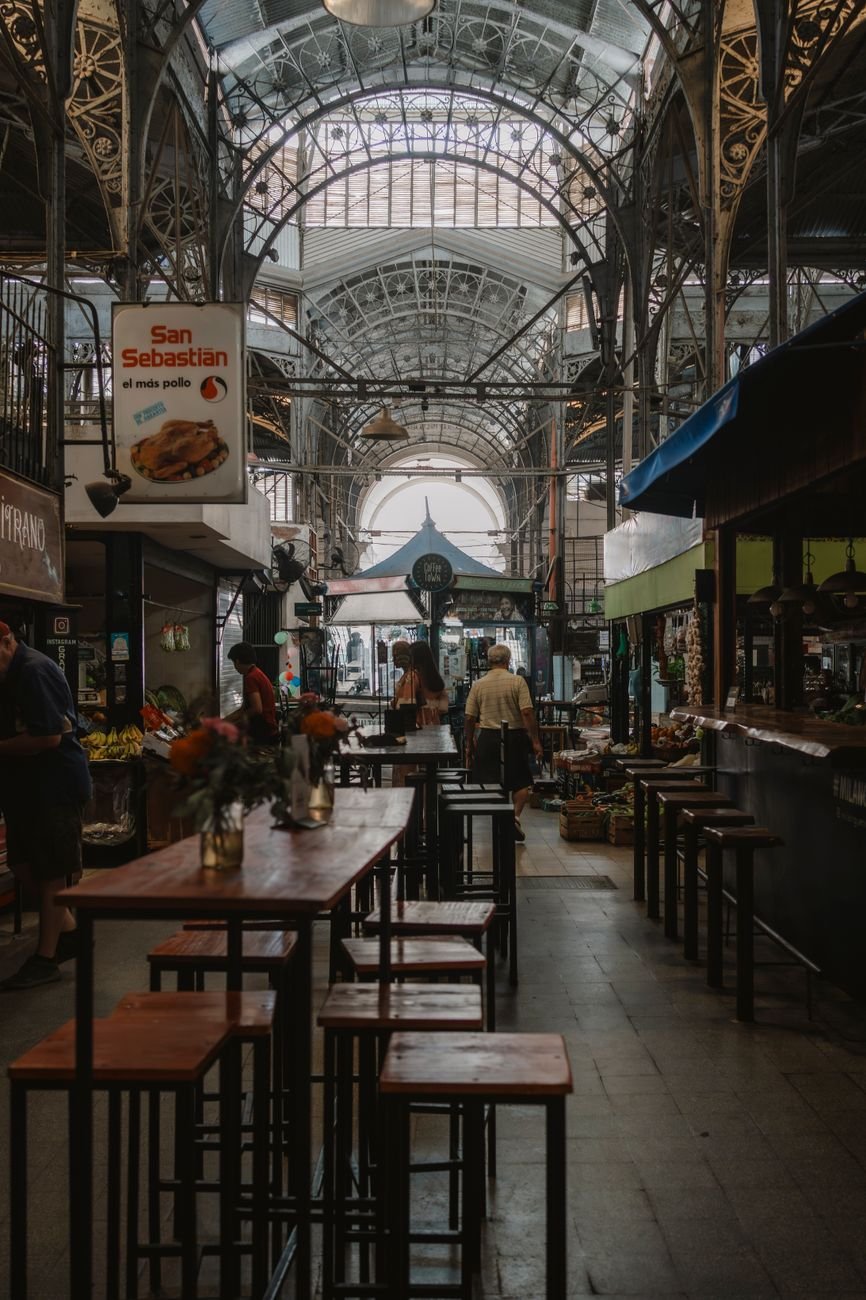
A family splits a tray of pastelitos at one end of a long communal table while two guys still in scrubs work through a bowl of pho at the other end, and nobody looks up. That collision, pastelito country sitting elbow to elbow with noodle country and no wall between them, is the real argument for the best food halls in Miami, and it has almost nothing to do with which one has the nicest ceiling installation or the longest line for a $9 espresso drink.
Food halls arrived in this city the way they arrived everywhere: as a real estate strategy, a way to fill a warehouse or a parking structure with enough vendors to justify the rent. But Miami had something most cities didn't when the format showed up: a population that already eats across four or five cuisines in a single week without thinking of it as adventurous. A good food hall here isn't importing diversity as a marketing angle. It's just finally putting under one roof what a Hialeah strip mall or a Doral office park already does on a Tuesday afternoon.
What the Best Food Halls in Miami Actually Get Right
The good ones resist the temptation to fill every stall with a version of the same three trends. Ten vendors selling loaded fries and artisanal soft serve is not a food hall, it's a mall food court with better lighting. What separates a serious room from a photogenic one is a vendor mix that actually argues with itself: a Cuban counter next to a Venezuelan one next to something Japanese or Korean, each doing its own thing at full volume instead of a watered-down fusion plate trying to please everyone at once.
The second tell is who's eating there on a weeknight. Rooms built for tourists empty out by Wednesday. Rooms that matter stay full of off-duty service industry workers, families with strollers, and old men nursing a colada long after the food is gone, because the seating wasn't installed as a photo backdrop. It was installed for people who actually plan to sit down.
Where to Look
Wynwood has the highest concentration, a byproduct of all those warehouse shells left over from the neighborhood's industrial past getting subdivided into vendor stalls instead of gallery space. The Design District and Midtown corridor lean a little more polished, with vendor rosters that skew toward chef-driven concepts rather than family operations. Little Haiti's edges and the stretch toward Little River have started producing smaller, rougher-around-the-edges versions that haven't been fully discovered yet, which is usually a good sign. Brickell's entries tend to serve the lunch crowd from the towers above them, so they're built for speed more than lingering, and that trade-off is worth knowing before you go in expecting a leisurely afternoon.
Little Havana itself mostly skips the food hall format in favor of the ventanita, the walk-up coffee window that's older and, frankly, better than anything a food hall can replicate. Go there for a classic ventanita experience instead, and save the food hall trips for neighborhoods where the format actually adds something a single kitchen can't.
What to Order Once You're Inside
Start with the coffee counter, if there is one, and get a cortadito rather than a full café con leche if you're planning to eat for the next hour. From there, look past whatever has the longest line of people holding phones and toward whatever has the longest line of people speaking Spanish or Kreyòl to the person behind the counter. That's usually the tell for what's actually good rather than what photographs well.
- Croquetas or pastelitos from a Cuban stall, ordered a few at a time rather than as a sampler platter
- Pernil with rice and beans if a Puerto Rican or pan-Latin vendor is in the mix
- Arepas or tequeños from a Venezuelan counter, which tend to be some of the most consistent food in any given hall
- Griot with pikliz if a Haitian vendor has a stall, ordered spicier than you think you want it
- Stone crab claws in season, but only from a counter that's actually cracking and chilling them properly, not just reheating
Skip anything described on a chalkboard as a "twist" on a dish you already know well. The vendors doing the most interesting work in these rooms are usually the ones cooking something specific and unbothered by trend, not the ones chasing one.
The Trade-Off Worth Knowing
Food halls solve a real problem. They let you eat three different countries' worth of food in one sitting without three separate car rides, but they solve it by trading away the thing that makes a single-owner restaurant feel like somewhere specific. A vendor stall answers to a landlord and a lease term, not necessarily to a neighborhood. The best ones fight that by hiring cooks who've actually run their own kitchens before, and it shows in the seasoning, the portion sizes, and the fact that the menu doesn't change every quarter to chase whatever's working on social media that month.
Go on a weeknight instead of a Saturday if you actually want to taste the place instead of just surviving the crowd. Order from whoever has the shortest patience for small talk and the longest line of regulars. That's usually where the real cooking is happening, food hall or not.