Best Day Trips From Miami: A Local's Guide
From the Overseas Highway to the Gulf Coast, here are the best day trips from Miami that get you out of the 305 and back before the ventanita closes.
By six-forty most mornings, the coffee window at a strip-mall cafeteria on Coral Way already has three cars idling out front, everybody ordering a colada to split before merging onto US-1. That ritual, cafecito in a foam cup while the sun isn't even all the way up yet and the windows stay down until the AC kicks in, is the actual starting gun for the best day trips from Miami. Not a hotel checkout. Not a rental car counter. A coffee window and a decision about which direction to point the car.
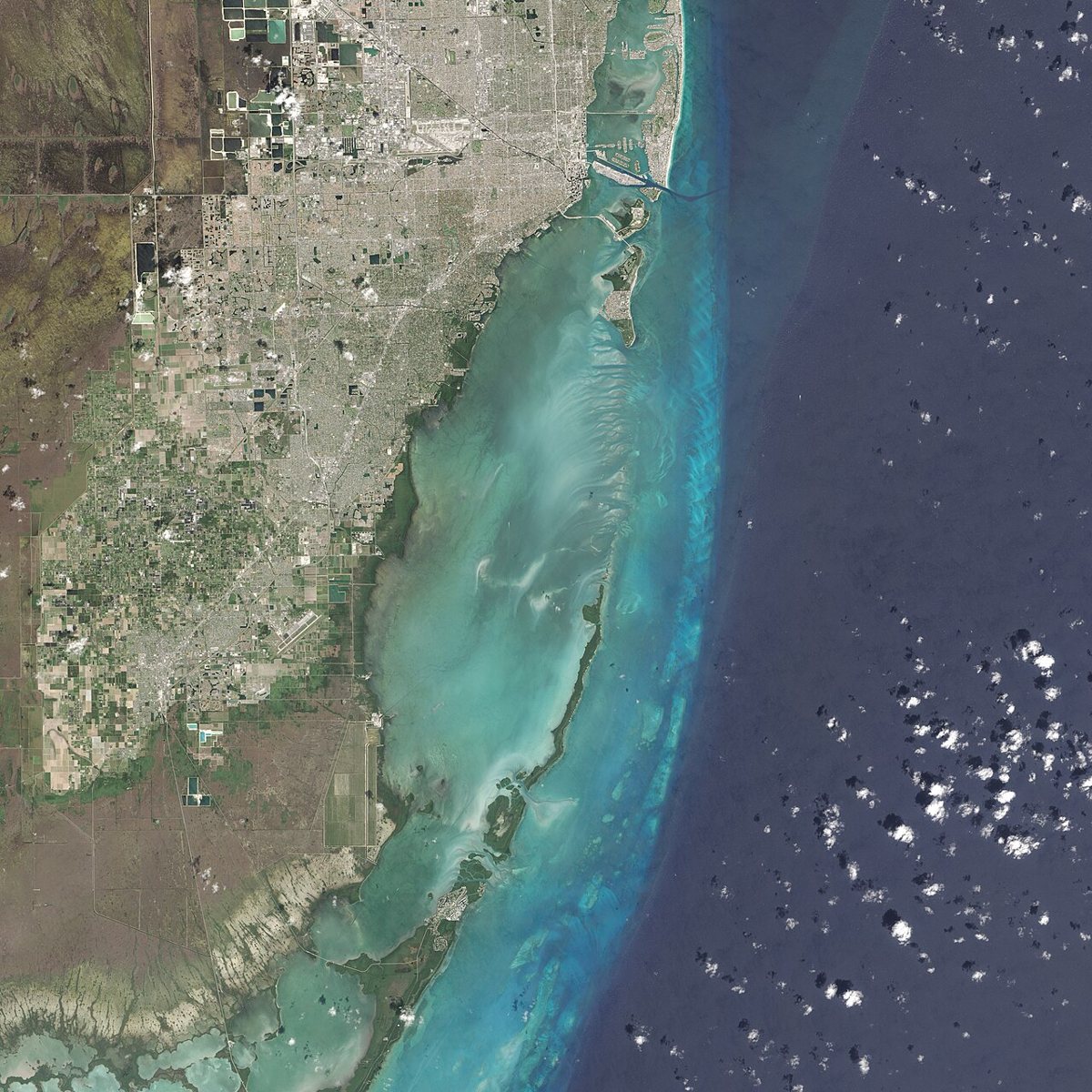
Miami sits in a strange, useful spot. Head south and the road narrows into a two-lane bridge chain over open water. Turn west and the city stops cold at a canal, then it's sawgrass all the way to the horizon. Keep going north and the coast never really stops, one municipality bleeding into the next, all the way to Palm Beach County. Cross the peninsula further west and you land on another coastline entirely, one that faces a different ocean's worth of sunsets. This guide covers all of it: the real, drivable, worth-the-gas destinations that Miamians actually use their one free Saturday for, whether that Saturday crew grew up speaking Spanish in Hialeah, Kreyòl in Little Haiti, or some mix of both plus a little Venezuelan Spanish picked up from a coworker in Doral.
The Best Day Trips From Miami, by Direction
Think of Miami as the hub and everything below as a spoke. South gets you the Keys and open water. West gets you the Everglades and Biscayne Bay's quieter half. Further west across Alligator Alley gets you the Gulf Coast around Naples. North gets you Fort Lauderdale and Palm Beach, two very different versions of South Florida wealth. And if you want to leave the country without touching an airport security line, there's a ferry for that too.
South on the Overseas Highway: The Keys
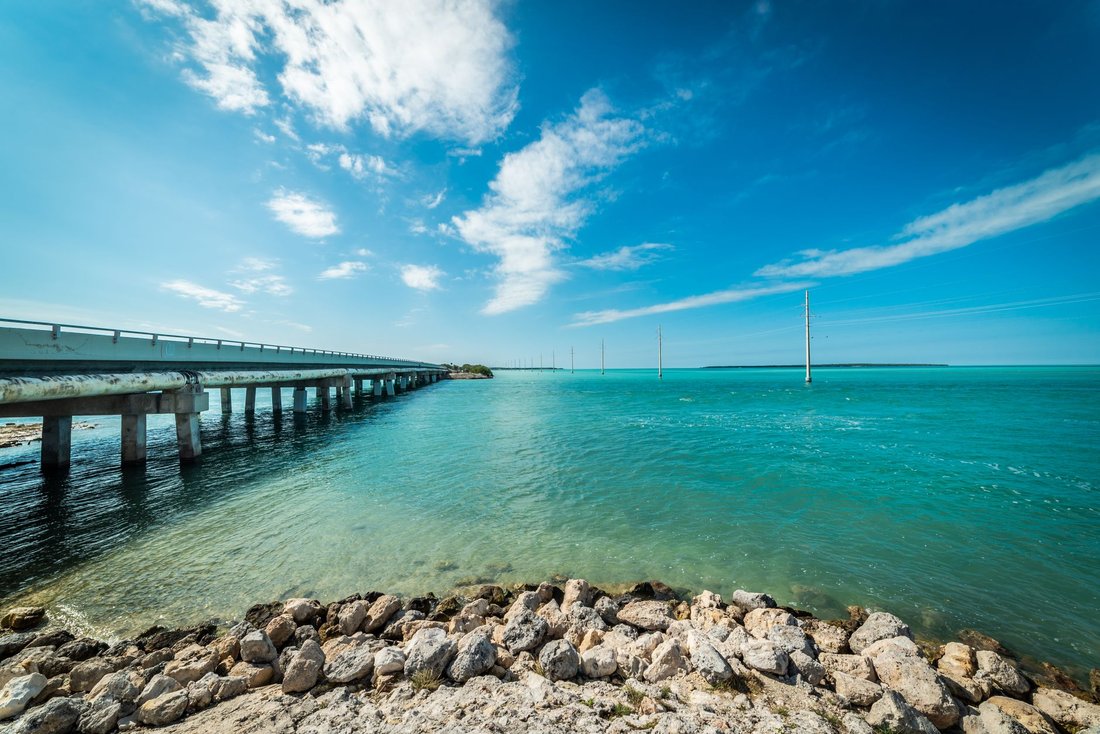
US-1 south of Florida City turns into the Overseas Highway, a single road strung across more than forty bridges connecting a chain of limestone and coral islands. There's no shortcut and mostly no passing lane, so the drive itself sets the pace for the whole day. Locals measure distance in mile markers, counting down from the low hundreds as they head toward zero.
Key Largo
The first real island after the mainland, Key Largo is where Miami goes to get in the water without committing to a full weekend. John Pennekamp Coral Reef State Park, the first underwater park established in the country, protects a stretch of living reef just offshore, and the glass-bottom boat tours out of the park make the reef visible even if you never get wet. Snorkelers and divers head out to see the submerged bronze Christ of the Abyss statue, sitting in shallow water a short boat ride from shore. Land-bound visitors can still get a piece of Hollywood history: the actual African Queen boat used in the 1951 film is docked and viewable at a marina in town.
Booking the first snorkel trip of the day pays off, since afternoon winds chop up the water and cut visibility considerably. The drive down from Miami runs about an hour south on US-1.
Islamorada
Islamorada bills itself as the sport fishing capital of the world, and the claim holds up. This isn't one island but a string of them, backcountry flats on one side and deep blue Atlantic on the other, which is why charter captains here can put a client on tarpon or bonefish or permit without ever leaving local waters. Robbie's Marina is the town's most photographed stop, where enormous tarpon gather at the docks to be hand-fed from buckets by tourists leaning over the railing. Founders Park has a public beach and pool if fishing isn't the point of your day.
No boat or fishing license is needed to enjoy Robbie's. Walking the docks and watching the tarpon feed is free, and only the bait bucket costs money. Islamorada sits roughly ninety minutes south of Miami.
Bahia Honda State Park
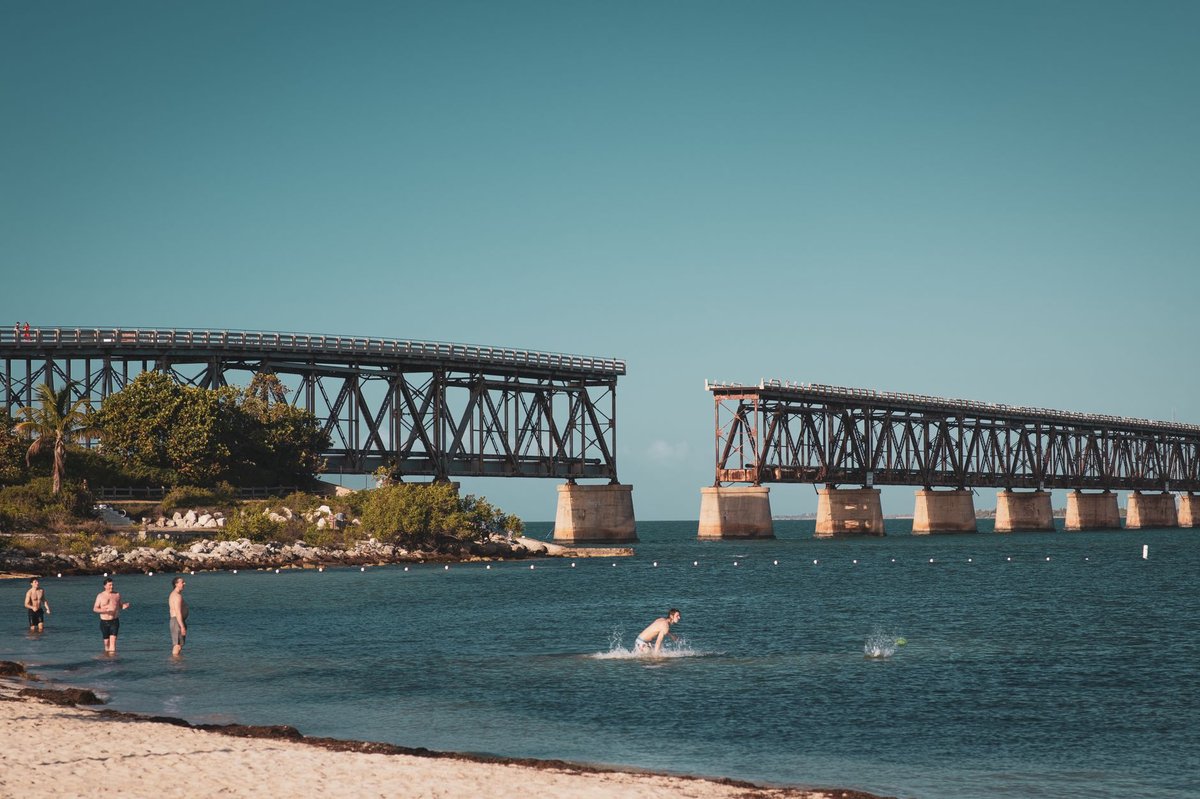
Past Marathon, the highway crosses onto Bahia Honda, home to what regularly gets ranked among the best beaches in the country and, unlike most of the Keys, an actual sandy one rather than a rocky shoreline. The rusted, roofless remains of the old Bahia Honda Bridge, a piece of Henry Flagler's original Overseas Railroad, arc out over the water next to the newer highway bridge, and climbing partway up the old span gives a full view of the channel below. Calusa Beach on the Gulf side is the calmer of the park's two beaches, good for swimming with small kids.
Space in the park's lot is limited and fills up by midmorning on weekends, so arrive early or plan on circling for a while. The drive from Miami takes roughly two hours.
Key West
The end of the road, literally. Key West sits closer to Havana than to Miami, and it carries itself accordingly: shrimp boats tied up at the docks, chickens that wander the streets like they own them, a downtown built for slow walking rather than driving. Duval Street gets the tourist traffic, but the town's real texture shows up a few blocks off it, in the wooden shotgun houses and backyard bars where locals actually spend their evenings. The Ernest Hemingway House still keeps descendants of his famous six-toed cats on the grounds, and the Southernmost Point buoy remains the most photographed traffic marker in Florida despite technically not being the southernmost point at all. Mallory Square draws a crowd every evening for its sunset gathering of street performers and vendors, a tradition that predates most of the bars around it.
Getting there by car is a long haul, close to four hours each way depending on traffic through the Lower Keys, though flying in from Miami International cuts the trip to under an hour. Driving means committing to a very long single day.
West Into the Everglades and Biscayne Bay
Miami's other frontier doesn't require a bridge at all, just a turn off the turnpike toward Homestead and Florida City, where the suburbs stop and the River of Grass starts. This corner of Miami-Dade gets overlooked by visitors chasing the Keys, which is a mistake, since it holds an ecosystem found nowhere else on the planet and a national park most of the country has never set foot in. The whole area doubles as Miami-Dade's working agricultural belt too, so the drive out passes actual fruit groves and packing houses rather than another round of strip malls, a reminder that the county grows plenty of its own mangoes and avocados long before either shows up in a smoothie downtown.
Shark Valley
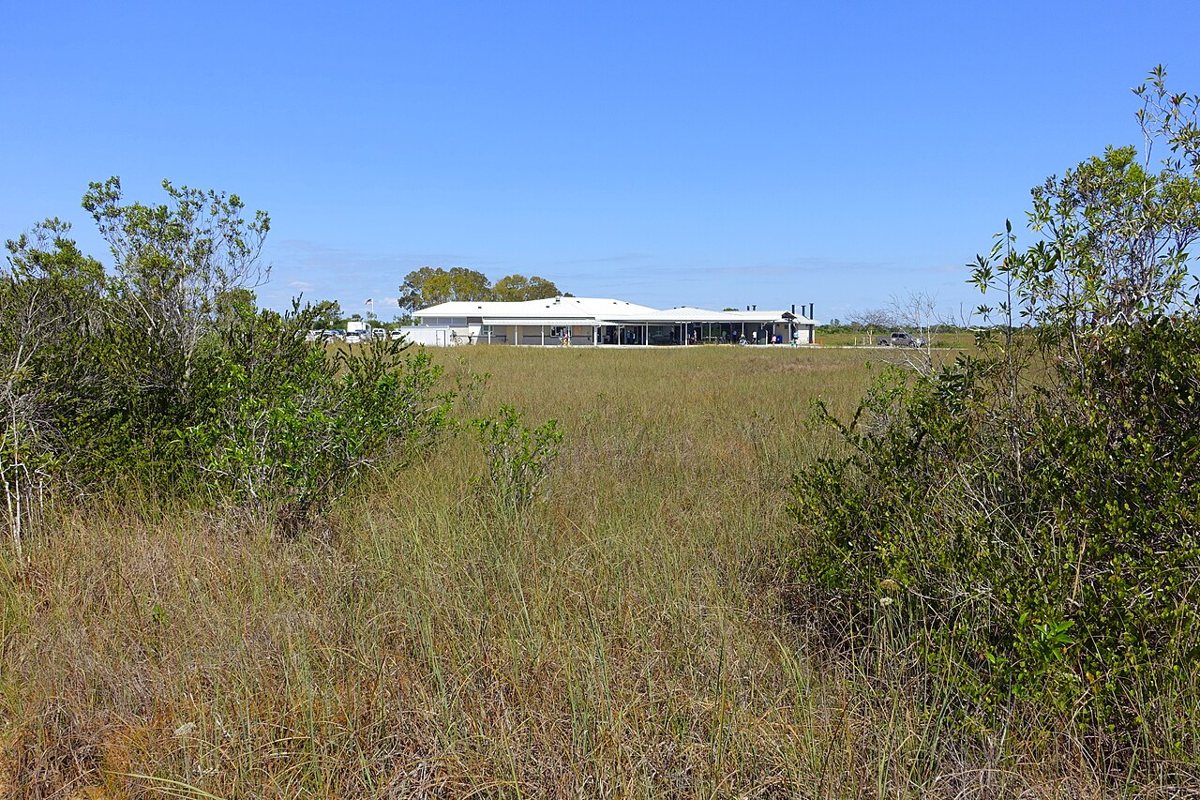
The Tamiami Trail entrance to Everglades National Park, known as Shark Valley, is the easiest way to see real Everglades wilderness without a boat. A fifteen-mile paved loop trail winds through sawgrass prairie, and most visitors either bike it, walk a portion of it, or take the guided tram tour that runs the full loop with stops at an observation tower overlooking the marsh. Alligators here are not shy. They sun themselves directly on the paved trail with total indifference to bicycles rolling past a few feet away, which is unnerving the first time and completely normal by the second visit.
Dry season, roughly December through April, is the smart window to go, since water levels drop and wildlife concentrates around the remaining pools, making sightings far more reliable. The entrance sits about forty-five minutes west of downtown Miami on the Tamiami Trail.

Everglades City and the Ten Thousand Islands
Keep going west on the Tamiami Trail and the road eventually spits you out at the Gulf side of the Everglades, a completely different landscape of mangrove islands, brackish channels, and old Florida fishing towns that never got the memo about condos. Everglades City and neighboring Chokoloskee were built on the stone crab and fishing trade, and the Ten Thousand Islands stretching out from their docks make for some of the best flatwater kayaking in the state, along with airboat tours through the mangrove tunnels. The Smallwood Store, a preserved early-1900s trading post on stilts in Chokoloskee, gives a look at how remote this stretch of coast was before roads reached it.
This is the quieter, less-touristed Everglades gateway compared to Shark Valley, and it pairs well with a stop at a fruit stand in Florida City for a fresh milkshake before the long drive back. Figure on about two hours from Miami.
Biscayne National Park
Most of Biscayne National Park is water, over ninety percent of it, which makes it one of the least-visited and most misunderstood national parks in the system. Boat tours leave from the bayfront visitor center near Homestead and head out to Boca Chita Key, a small island crowned with a distinctive ornamental lighthouse that a wealthy Miami industrialist built in the 1930s, or continue on to coral reefs just offshore that rival anything in the Keys for snorkeling. Because it requires a boat to see the good parts, it stays far less crowded than its neighbors to the south.
The visitor center and grounds are free to walk even without booking a boat tour, and the bayfront trail alone is worth the short detour. It sits about an hour south of Miami, near Homestead.

West Coast: Naples and Marco Island
Crossing the state on Alligator Alley, the stretch of I-75 that cuts straight through the Everglades, lands you on an entirely different coastline facing the Gulf of Mexico. Naples and Marco Island feel more like a retirement postcard than Miami's Latin American energy, all manicured and quiet, but the Gulf sunsets alone make the drive worth it for a change of scenery.
Naples
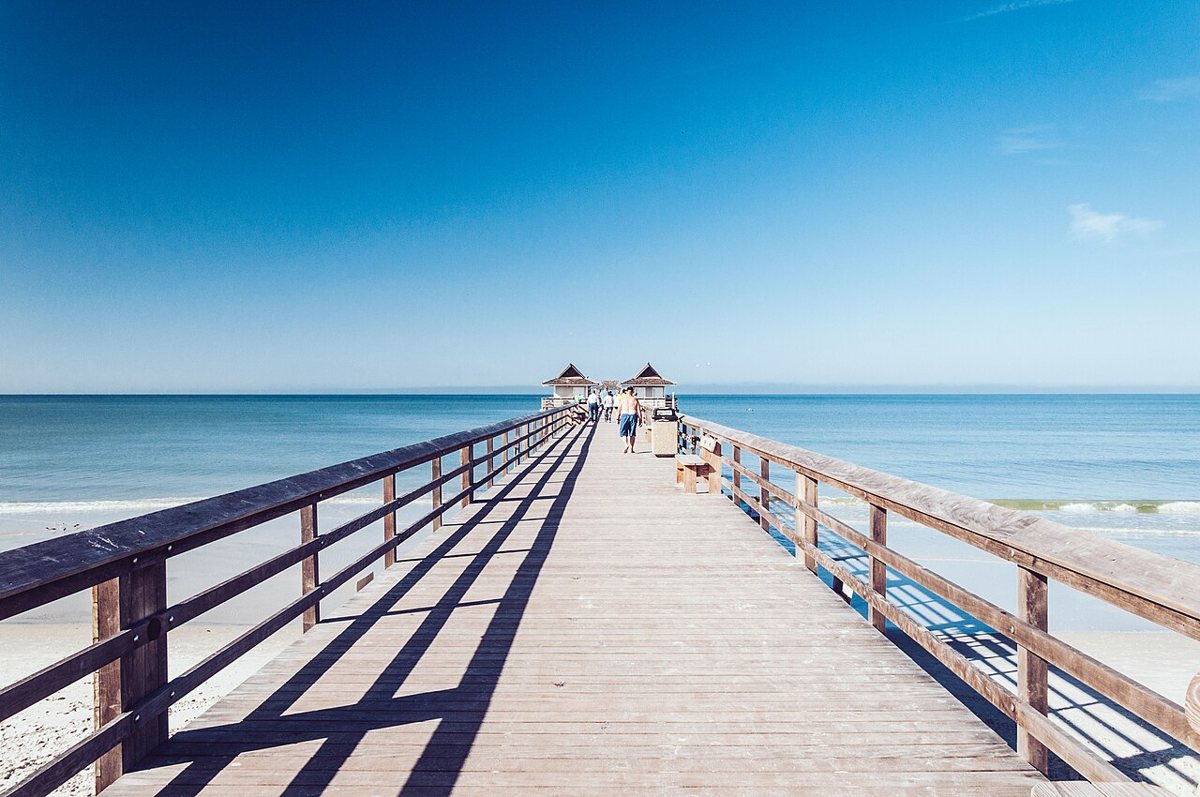
Naples built its reputation on a walkable downtown and a beach that faces due west, which means the sunset show off the Naples Pier is a nightly event with an actual crowd. Fifth Avenue South runs through the center of downtown with restaurants and galleries filling out old Florida storefronts. Just inland, Corkscrew Swamp Sanctuary protects the largest remaining stand of old-growth bald cypress in the country, with a boardwalk trail winding through it that feels more like the Everglades' quieter, wooded cousin than a beach town amenity.
Parking near the pier fills fast around sunset, so walking or biking in from a few blocks back saves the circling. Naples sits about two and a half hours from Miami via Alligator Alley.

Marco Island
South of Naples, Marco Island is the last barrier island before the Ten Thousand Islands take over, and its beaches are wide, shallow, and calm in a way that Miami's Atlantic side rarely manages. Tigertail Beach draws birdwatchers and families in equal measure, with a lagoon separating the main beach from a sandbar that shifts with the tides. It's a quieter, more residential stop than Naples proper, useful if the goal is simply sand and water without a downtown to navigate.
Pairing Marco Island with Naples in the same day trip makes sense, since the two sit less than half an hour apart. Aim for low tide if the sandbar walk out to the birds is the goal, since it disappears completely at high water, and budget two and a half to three hours from Miami.
North Along the Coast: Fort Lauderdale and Palm Beach
Heading north on I-95 stays inside the same metro sprawl for a while before the character changes noticeably. Fort Lauderdale and Palm Beach both sit close enough for an easy half-day trip, and neither one is Miami with a different name, despite what some visitors assume.
Fort Lauderdale
Fort Lauderdale earned the old nickname Venice of America for its extensive canal network, and a water taxi ride through them remains one of the better ways to see the city's waterfront mansions without paying for one. Las Olas Boulevard is the town's main strolling street, lined with restaurants and boutiques leading down toward the beach. The Riverwalk along the New River gives a quieter, shaded alternative for an afternoon walk, with the Museum of Discovery and Science and the NSU Art Museum both sitting along its path. The beach itself, wide and less packed than Miami's, runs along a promenade built for walking rather than driving past.
Parking once, near Las Olas or the Riverwalk, and walking everywhere from there beats fighting the traffic and parking near the beach itself, which gets tight on weekends. The drive north from Miami runs thirty to forty-five minutes depending on where you start.

Palm Beach and West Palm Beach
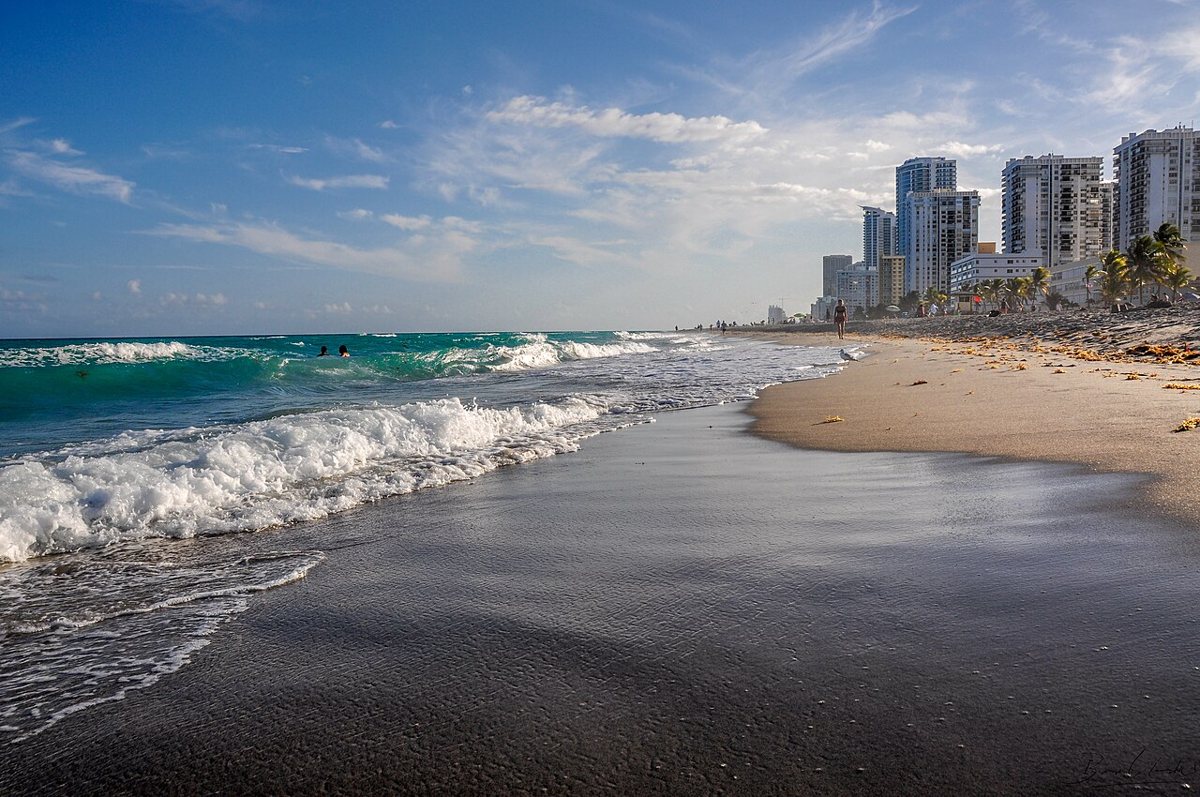
Palm Beach proper is the old-money island, all hedges and hidden gates along Worth Avenue's boutique row, with The Breakers hotel anchoring the town's Gilded Age reputation. The Flagler Museum, housed in Henry Flagler's 1902 mansion Whitehall, lays out the story of how a railroad tycoon built much of coastal Florida from scratch, this same coastline the rest of this guide runs along. Across the Intracoastal, West Palm Beach carries the actual city energy, with Rosemary Square and the Norton Museum of Art giving it a livelier, more walkable counterpart to its exclusive island neighbor.
The two towns feel worlds apart despite sitting a bridge's length from each other, so budget time for both rather than picking just one. Figure on an hour and a half to two hours north of Miami for the drive.
Further Out: A Bahamas Note
Technically not a day trip most people attempt, but worth knowing about: a high-speed passenger ferry runs from downtown Miami across the Gulf Stream to Bimini in the Bahamas, cutting out the need to fly. The crossing puts you on a genuinely different, much smaller island within a few hours, with clear water that makes the trip feel longer distance than it actually is. Bimini has none of Miami's density. It's a couple of narrow roads, some bonefishing flats, and a slower rhythm altogether, the kind that makes the short crossing feel worth the effort. Pack a passport and check current entry requirements before committing, since this is the one destination on this list that involves an actual international border, and build in enough of a buffer that a delayed return crossing doesn't turn into an unplanned overnight.
Getting There: Practical Notes on Timing, Roads, and Free Options
A few things make or break the best day trips from Miami, regardless of which direction gets picked.
US-1 and the Overseas Highway
- Fill the gas tank in Florida City before heading south. Stations thin out considerably once the islands start.
- Much of the Overseas Highway is a single lane in each direction with no passing. A slow RV ahead sets the pace for miles.
- Mile markers count down from the high 100s near Florida City to 0 in Key West, and locals use them as addresses more than street names.
Everglades timing
- Dry season, roughly December through April, brings cooler weather and far fewer mosquitoes, and wildlife visibility improves as water recedes and animals gather near the remaining pools.
- Summer trips are workable but demand bug spray and sun protection, plus an early start before afternoon storms roll in.
- Early morning and late afternoon are the most active wildlife windows in any season.
Beating traffic
- Leave before seven if possible. Both the southbound Keys traffic and the northbound I-95 corridor build fast on weekend mornings.
- Sunday afternoon return trips from the Keys back into Miami can rival rush hour, so plan the drive back accordingly.
- Alligator Alley toward Naples has long, featureless stretches with a posted toll and no cell service for parts of the drive, so fill the tank and download any music or podcasts before crossing.
- Hurricane season runs June through November, and afternoon thunderstorms are a daily near-certainty in summer regardless of destination, so build a rain plan into any warm-weather day trip.
Free or nearly free options
- Watching the tarpon feed at Robbie's Marina docks in Islamorada costs nothing beyond the bait.
- Mallory Square's sunset gathering in Key West is free and happens every evening regardless of season.
- Walking Las Olas Boulevard or the Riverwalk in Fort Lauderdale costs nothing but a parking spot.
- The Biscayne National Park visitor center and bayfront trail near Homestead are free without booking a boat tour.
- Driving the Overseas Highway itself, bridge to bridge, remains one of the best free scenic drives in the country.
None of this requires South Beach or a rooftop bar to make sense of Miami's location. The city works as a hub precisely because it sits between so many different kinds of Florida, and the same road network that carries commuters from Hialeah to Brickell every morning also carries a car south to a coral reef or west to sawgrass stretching further than the eye can track. Locals don't treat these trips as a special occasion. They're a Saturday, planned the night before over dinner in the ventanitas of Little Havana, executed with a cafecito and a full tank of gas. The out-of-towners who only ever see Wynwood's mural-covered warehouses and the beach are missing the part of Miami that made the rest of it possible: a spot on the map where four or five distinct versions of Florida all sit within a couple hours of the same front door. Pick a direction. The rest sorts itself out on the drive.