Wynwood Neighborhood Guide, Block by Block
Wynwood is not a mural backdrop; it is a working arts district in the middle of an argument with its own success, and the block you're standing on tells you who's winning.
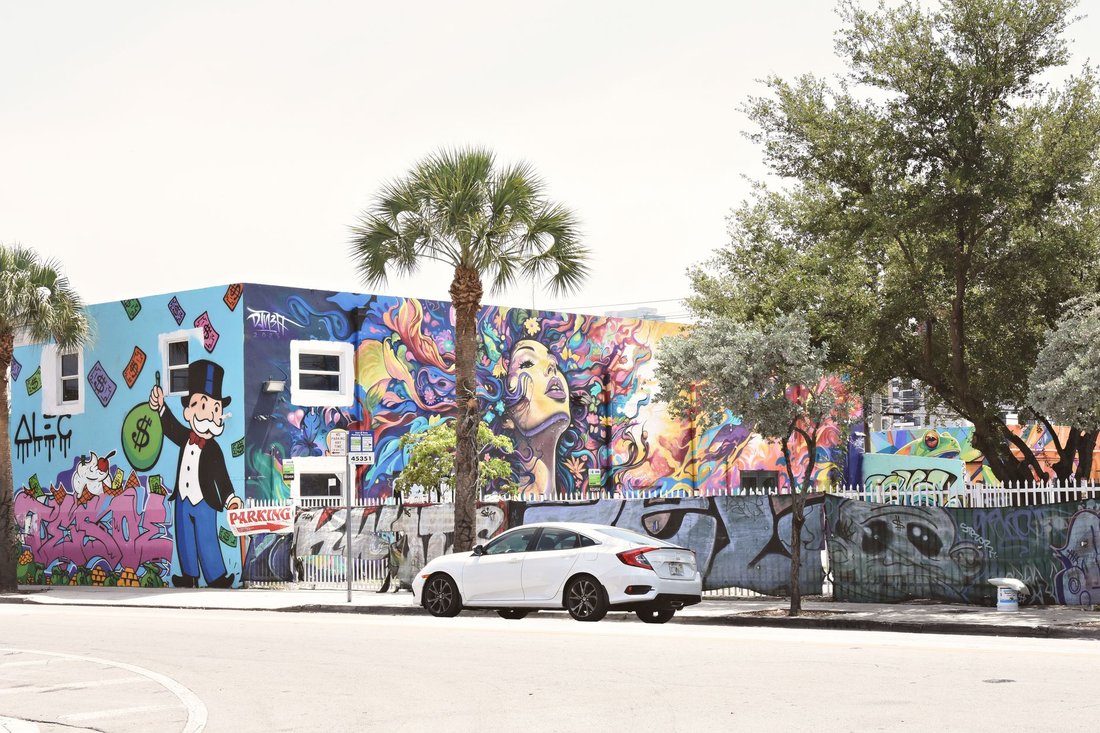
The forklift beeping outside a warehouse on NW 2nd Avenue drowns out whatever reggaeton is playing from the coffee stand across the street, and nobody seems bothered. Spray paint fumes drift over a folding table selling pastelitos. A crew touches up a mural that went up eighteen months ago, painted over an earlier version that lasted maybe two years before it. Any honest wynwood neighborhood guide has to start there, with the fact that nothing in this neighborhood holds still for long.
Ask someone who worked here before the tour buses arrived and they will tell you Wynwood was a Puerto Rican and working-class pocket of garment factories and warehouses long before an art collector looked at those empty walls and saw an opportunity. That history did not disappear so much as get painted over, the way the murals themselves keep getting painted over. What is left now is a district arguing with its own reflection. It is still called an arts district. In practice it functions more and more like a retail and event district, with breweries and flagship storefronts moving into buildings that used to hold spray-paint studios and sheet-metal shops.
A Wynwood neighborhood guide starts at the walls
The Wynwood Walls remain the obvious entry point, and there is a reason first-timers still head there. The outdoor collection turned a stretch of warehouse exterior into a mural cluster that ranks among the country's most photographed, and it did the thing it set out to do: it made people look at a neighborhood they had been driving past for decades. Go early if you want the light without the crowds. Go at golden hour if you want the crowds and don't mind them; the energy shifts and strangers start talking to each other in front of the same wall.
What the Walls don't tell you is everything happening one block over. NW 2nd Avenue is the spine of the district, and walking it end to end is the closest thing Wynwood has to a proper orientation. Warehouse galleries sit shoulder to shoulder with clothing stores that didn't exist five years ago. Some of those galleries are serious, run by people who have been showing work here since before the Walls opened. Others rotate through so fast you can't be sure what you'll find on a return visit. That unpredictability is part of the character, for now.
The side streets still hold the old grain
Step off NW 2nd Avenue onto the numbered side streets and the polish thins out fast. Roll-up garage doors, faded signage in Spanish, a lechonera smell drifting from somewhere you can't quite locate. This is closer to what Wynwood looked like before it became a stop on every visitor's itinerary, and it is worth walking slowly here rather than beelining back to the main corridor. You won't find a plaque explaining the Puerto Rican families who built this neighborhood. You'll find it in the bones of the buildings instead, in the older auto shops that never got the mural treatment because nobody thought to ask.
Coffee, beer, and the food that isn't trying to be Instagrammed
Cuban coffee culture runs through Wynwood the way it runs through the rest of the city, and the neighborhood's ventanitas are worth seeking out over the sit-down cafes aimed at tourists. Ask for a cortadito if you want something closer to what locals actually drink than what gets photographed. For a proper cortadito, skip the place with the line out the door and look for the walk-up window with regulars leaning on the counter mid-conversation.
The craft beer scene grew up alongside the gallery district and now anchors a good chunk of Wynwood's weekend traffic, with taprooms occupying former industrial space the same way the galleries did. Venezuelan arepas show up on menus throughout the neighborhood too, a reminder that the district's food identity was never built on one country's cooking alone. Between the coffee stands, the taprooms, and the arepa spots, you get a more accurate read on who actually lives and works here than any mural wall provides.
Reading the neighborhood block by block
- NW 2nd Avenue: the main corridor, galleries and retail mixed together, busiest on weekend afternoons and during scheduled gallery walks
- The Wynwood Walls area: the most photographed stretch, best visited early morning or right at golden hour
- The numbered side streets east and west of 2nd Avenue: older warehouse stock, fewer crowds, more of the pre-arts-district texture
- The edges toward the Design District: newer construction, higher-end retail, a visible preview of where Wynwood's commercial shift is heading
Wynwood sits within walking distance of two neighborhoods that offer useful contrast. Head north and slightly east and you're moving toward the nearby Design District, where the galleries give way to luxury storefronts and the whole feel turns polished in a way Wynwood hasn't fully committed to yet. Head further north and you're approaching Little Haiti, a neighborhood with its own deep cultural roots that has so far resisted the kind of rebranding Wynwood underwent. Standing at the boundary between the three, you can watch a single corridor shift character in the space of a ten-minute walk.
Practical notes for actually walking it
Wear shoes you can stand in for a few hours; the sidewalks are uneven warehouse pavement, not manicured plaza tile. Parking gets tight fast, especially on weekends, so budget extra time or plan to walk in from a nearby neighborhood. Gallery hours vary block by block and some spaces only open for scheduled walks, so don't assume every warehouse door will be unlocked when you pass. Midweek mornings offer the clearest look at the neighborhood's working bones, before the crowds arrive and the district shifts back into performance mode.
The murals will look different the next time you come back, and that's not a flaw in the plan. Wynwood was never meant to be preserved in amber. The real question worth carrying with you isn't which wall to photograph. It's whether the neighborhood underneath the paint, the one with the ventanitas and the sheet-metal shops and the families who were here first, gets to keep a seat at its own table as the buildings around it keep changing hands.